Ozymandias
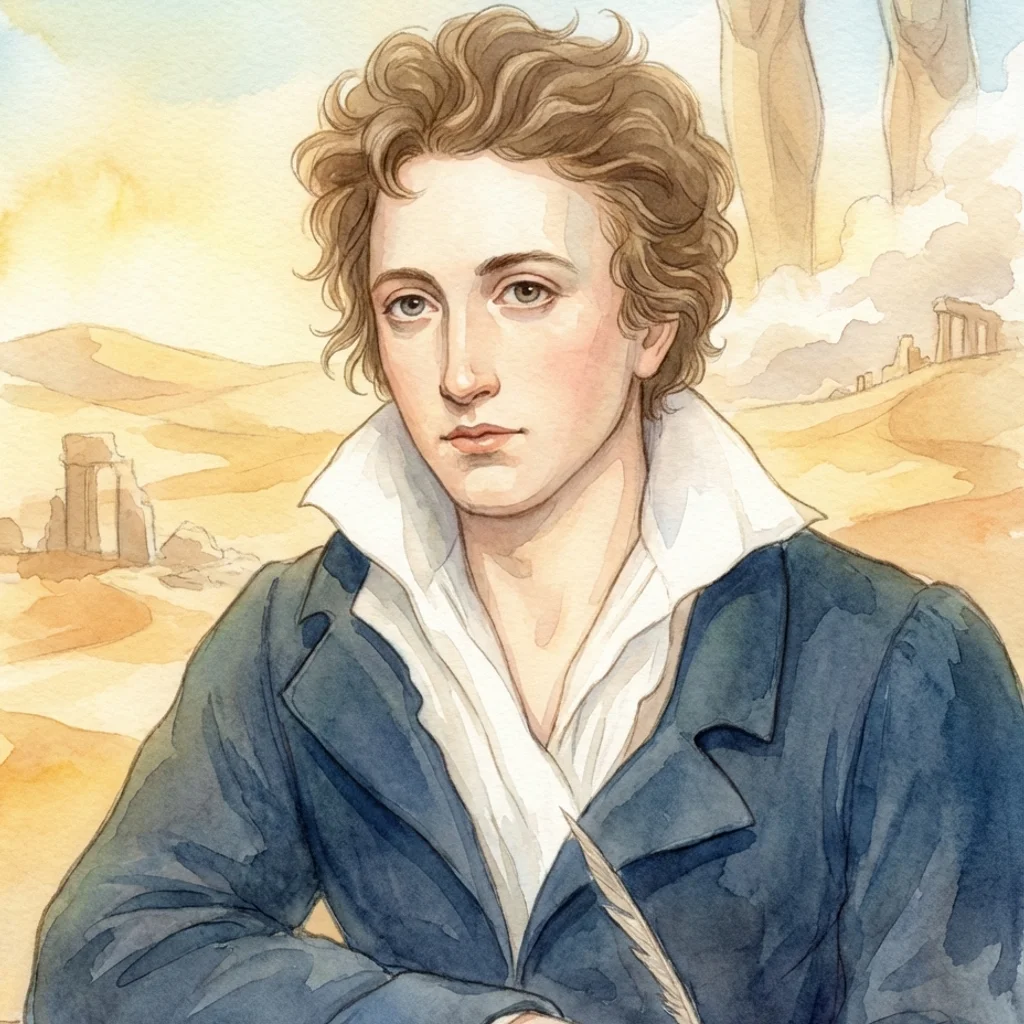 Percy Bysshe Shelley
Written: 1817 • Published: 1818
This poem is in the public domain and may be freely reproduced.
I met a traveller from an antique land Who said: “Two vast and trunkless legs of stone Stand in the desert . . . Near them, on the sand, Half sunk, a shattered visage lies, whose frown, And wrinkled lip, and sneer of cold command, Tell that its sculptor well those passions read Which yet survive, stamped on these lifeless things, The hand that mocked them, and the heart that fed: And on the pedestal these words appear: ‘My name is Ozymandias, king of kings: Look on my works, ye Mighty, and despair!’ Nothing beside remains. Round the decay Of that colossal wreck, boundless and bare The lone and level sands stretch far away.”
Curator's Note
Shelley's sonnet is the perfect distillation of Romantic irony, inspired by the British Museum's acquisition of a fragment of Ramesses II's statue. The poem works through nested frames: a traveler tells the speaker about ruins in the desert—shattered legs of stone, a face half-buried in sand, and an inscription boasting 'Look on my Works, ye Mighty, and despair!' But the works are gone; nothing remains but 'lone and level sands stretch far away.' Ozymandias (Greek name for Ramesses II) commanded his statue to make others despair at his greatness, but now we despair at the futility of his pride. The 'sneer of cold command' survives in stone because the sculptor understood the tyrant better than the tyrant understood himself—art outlasts power, but even art crumbles. Shelley, writing in the shadow of Napoleon and British Empire, reminds us that all empires fall, all monuments decay, all boasts ring hollow in time's desert. The poem's power lies in its restraint: no moralizing, just the image of vast emptiness surrounding shattered pride.
Related Poems

1911
1911
c. 1650
1648