Notable Works
- To the Virgins, to Make Much of Time
- Delight in Disorder
- Upon Julia's Clothes
- Corinna's Going A-Maying
- To Daffodils
Robert Herrick was an English lyric poet of the seventeenth century who created some of the most perfect short poems in the English language. A clergyman who seemed more pagan than Christian, Herrick wrote exquisite verses celebrating love, beauty, nature, and the brevity of life. His poetry combines classical learning with English folk traditions, creating work that is simultaneously sophisticated and immediately appealing. Though largely forgotten for two centuries after his death, Herrick is now recognized as one of the finest craftsmen in English poetry.
Early Life and Education
Born in London in 1591, Herrick was the son of a goldsmith who died—possibly by suicide—when Robert was just over a year old. At sixteen, Herrick was apprenticed to his uncle, also a goldsmith, but the trade didn’t suit his temperament. At twenty-two, unusually late, he entered St. John’s College, Cambridge, graduating with a B.A. in 1617 and an M.A. in 1620.
At Cambridge and in London literary circles, Herrick became associated with the “tribe of Ben”—the poets who gathered around Ben Jonson, England’s leading literary figure after Shakespeare. Jonson’s influence on Herrick was profound. From Jonson, Herrick learned classical meters, the ideal of the well-made poem, and the value of polish and revision.
The Classical Tradition
Herrick immersed himself in classical poetry, particularly the Latin love poets—Catullus, Horace, Ovid, and the Greek poet Anacreon. These influences shaped his major themes: carpe diem (seize the day), the transience of beauty, the pleasures of wine and love, and the celebration of natural cycles.
His classical learning sits lightly in his verse. Unlike more pedantic imitators, Herrick naturalized classical models, making them speak in clear English while maintaining their grace and concision. His poems feel spontaneous despite being carefully crafted—a classical ideal of art concealing art.
Dean Prior and Country Life
In 1629, perhaps needing income or pressured by family, Herrick took holy orders and was appointed vicar of Dean Prior, a remote parish in Devon. This exile from London to the countryside was, by his own account, a catastrophe. He called Dean Prior “dull” and wrote poems complaining about rural ignorance and coarseness.
Yet this supposed exile produced his greatest poetry. The Devon countryside, whatever his complaints, provided imagery of flowers, festivals, and seasonal change that permeates his work. His poems about May Day celebrations, harvest customs, and country rituals are both ethnographic records and beautiful verses celebrating life’s cyclical nature.
Herrick never married, though he wrote love poems to various women—Julia, Corinna, Anthea, Perilla—who may be real, composite, or entirely fictional. His household at Dean Prior included a maidservant, Prudence Baldwin, whom he mentions affectionately in poems, and a succession of pets, including a spaniel, a hen, and a lamb.
Hesperides
In 1648, as England descended into Civil War and Puritanism, Herrick published Hesperides, a collection of over 1,400 poems. The title refers to the mythical garden of golden apples in the far west—an appropriate metaphor for poetry that celebrates earthly pleasures and classical paganism. A separate section, Noble Numbers, contained his religious verse.
The collection received little notice. The timing was disastrous—England was in political and religious turmoil, and Herrick’s celebration of pleasure and ceremony seemed frivolous or even offensive to Puritan sensibilities. In 1647, he had been ejected from his living at Dean Prior as part of the Puritan purge of Anglican clergy. He returned to London, where he apparently lived in poverty.
Major Poems
“To the Virgins, to Make Much of Time” contains perhaps the most famous carpe diem opening in English: “Gather ye rosebuds while ye may, / Old Time is still a-flying: / And this same flower that smiles today / Tomorrow will be dying.” The poem advises young women to marry while they’re still young and beautiful, but its message transcends its occasion—it’s a lyric meditation on time, beauty, and mortality.
“Delight in Disorder” exemplifies Herrick’s aesthetic of controlled spontaneity. The poem celebrates a woman’s clothing slightly disarrayed—“A sweet disorder in the dress”—which is more attractive than perfect order. The poem itself embodies this principle: it seems casual but is perfectly crafted, its apparent ease the result of art.
“Upon Julia’s Clothes” demonstrates Herrick’s gift for compression. In just six lines, the poem captures the senuous appeal of silk clothing in motion: “Whenas in silks my Julia goes, / Then, then, methinks, how sweetly flows / That liquefaction of her clothes.” The invented word “liquefaction” brilliantly conveys the visual effect of flowing fabric.
“Corinna’s Going A-Maying” is Herrick’s longest and perhaps greatest lyric. The poem calls Corinna to join the May Day celebrations, using the pagan ritual as an occasion to urge the enjoyment of life and love. The poem’s final stanza turns darker, acknowledging death: “Then be not coy, but use your time, / And while ye may, go marry: / For having lost but once your prime, / You may for ever tarry.”
Religious Poetry
Herrick’s religious poems, collected as Noble Numbers, are less celebrated than his secular verse but show the same craftsmanship. These poems are simpler and more direct than his love lyrics, expressing conventional piety without the intensity of metaphysical religious poets like Donne or Herbert.
This division in Herrick’s work—between classical pagan celebration and Christian devotion—was typical of Caroline poets but seems particularly stark in his case. He appears to have kept these modes separate rather than attempting to reconcile them.
Restoration and Return
After the Restoration of Charles II in 1660, Herrick regained his living at Dean Prior, where he lived until his death in 1674 at age eighty-three. He published no more poetry, suggesting that the creative period had ended. His last years in Devon are largely undocumented.
When he died, he was buried in an unmarked grave. No contemporary recorded his death. The poet who had written hundreds of poems celebrating life, love, and fame died in obscurity and silence.
Poetic Characteristics
Herrick’s poetry is distinguished by:
- Economy: He could express complex ideas in remarkably few words
- Musicality: His meters and rhythms are perfectly controlled
- Imagery: Particularly flower imagery drawn from nature
- Tone: Light, graceful, apparently spontaneous
- Classical influence: Greek and Latin models adapted to English
- Epigram: Many poems are essentially expanded epigrams
His best poems seem effortless, though they are the product of careful revision. This concealment of labor is itself a classical ideal—art should appear natural.
Influence and Rediscovery
After his death, Herrick was largely forgotten. The eighteenth century found him too light; the early nineteenth century found him immoral. Not until the late nineteenth century did his reputation recover. Victorian poets like Swinburne championed him, and modern anthologies restored him to prominence.
Modern readers appreciate qualities the Victorians found troubling: his frank eroticism, his pagan celebration of nature, his refusal of Christian guilt. His technical accomplishment has made him a favorite of poets interested in craft.
Legacy
Herrick represents the English lyric tradition at its finest. His poems have an immediacy and perfection that make them ideal for memorization and quotation. Lines like “Gather ye rosebuds” have entered the language as proverbial wisdom.
He demonstrated that short poems could be as significant as epics, that pleasure was a worthy subject for serious art, and that classical models could be naturalized in English poetry. His celebration of transient beauty—flowers, youth, love—acknowledges loss while affirming life’s sweetness.
In an age of religious and political conflict, Herrick created a body of work that stands apart, celebrating the timeless pleasures of love, nature, and art. His poems remain as fresh and perfect as the flowers they describe, their brevity and beauty a defiance of time’s destructive power.
Influenced By
- Ben Jonson
- Horace
- Catullus
- Anacreon
Poems by Robert Herrick (1)
Browse with filters →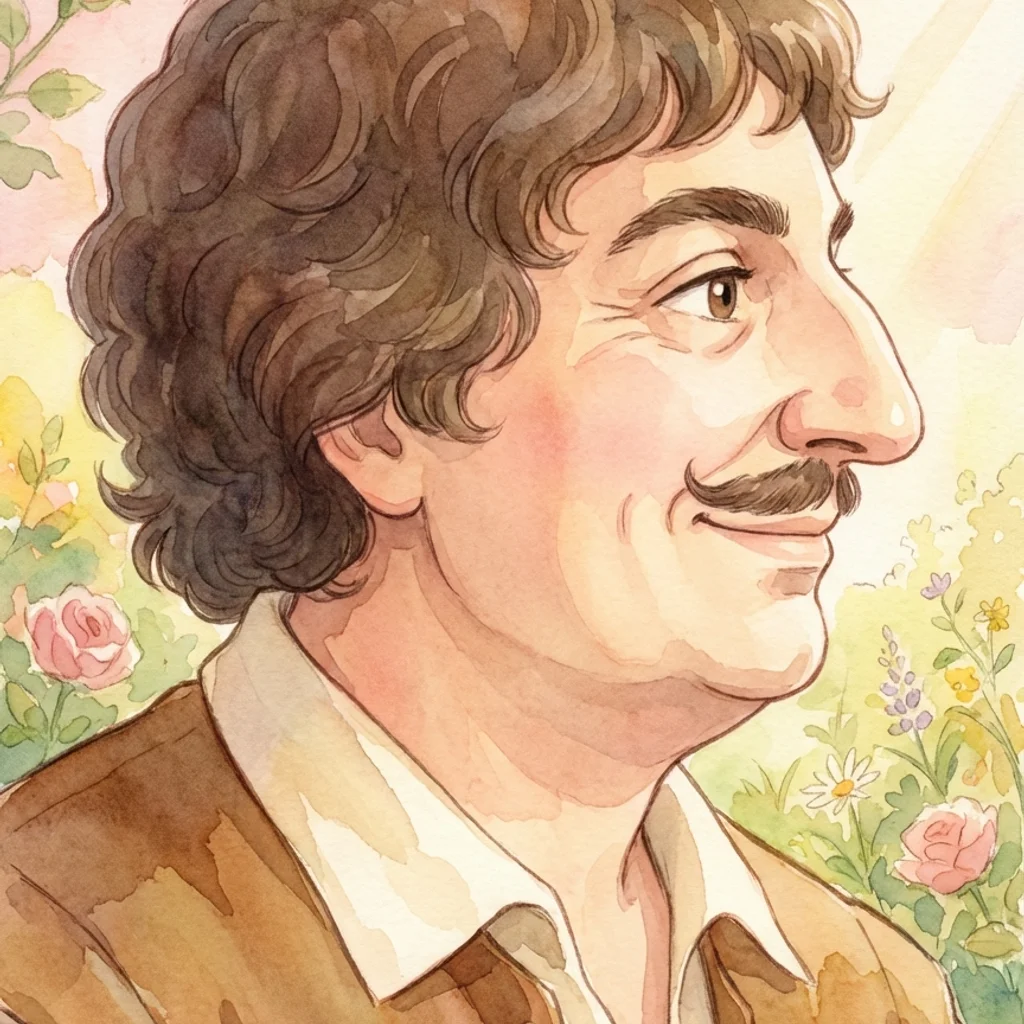
1648