Notable Works
- To His Coy Mistress
- The Garden
- An Horatian Ode upon Cromwell's Return from Ireland
- The Mower poems
- Upon Appleton House
Andrew Marvell was a seventeenth-century English metaphysical poet and politician who created some of the most perfect lyric poems in the English language. Writing during the tumultuous period of the English Civil War and Restoration, Marvell combined passionate engagement with contemporary politics with exquisitely crafted poetry on love, nature, and time. His work is characterized by wit, compression, paradox, and a fusion of sensuality and intellectuality that exemplifies metaphysical poetry at its finest.
Early Life and Education
Born in 1621 in Winestead, Yorkshire, Marvell was the son of a Church of England clergyman. He was educated at Hull Grammar School and Trinity College, Cambridge, where he received a rigorous training in classical literature and rhetoric that would shape his poetic style. His father drowned in 1641 while crossing the Humber, leaving Marvell without clear prospects.
During the 1640s, the decade of civil war between Royalists and Parliamentarians, Marvell traveled in Europe, tutored the daughter of a retired general, and gradually aligned himself with the Parliamentary cause. This period produced little surviving poetry, but his experiences informed his political understanding.
The Fairfax Years
From 1650 to 1652, Marvell served as tutor to Mary Fairfax, daughter of Thomas Lord Fairfax, the Parliamentary general who had retired to his Yorkshire estate at Nun Appleton. This period was Marvell’s most productive poetically. The pastoral and meditative poems written during these years—including “The Garden,” “Upon Appleton House,” and the Mower poems—explore themes of nature, solitude, and the relationship between contemplation and action.
“The Garden” is perhaps his most celebrated poem after “To His Coy Mistress.” It praises the garden as a place of sensual and intellectual pleasure superior to social or political life: “Society is all but rude, / To this delicious solitude.” The poem moves through sensory experience (“Ripe apples drop about my head”), intellectual contemplation, and finally mystical transcendence, demonstrating Marvell’s characteristic blend of physical immediacy and metaphysical speculation.
Political Poems
Marvell’s “An Horatian Ode upon Cromwell’s Return from Ireland” (1650) is one of the greatest political poems in English. Written to commemorate Cromwell’s brutal Irish campaign, the poem navigates extraordinary complexity, honoring both Cromwell’s power and King Charles I’s dignity in death: “He nothing common did or mean / Upon that memorable scene.” The poem refuses simple partisanship, instead exploring the tragic necessities of political power with classical restraint.
This ability to see multiple perspectives while maintaining artistic integrity distinguishes Marvell from more straightforwardly partisan writers. He understood politics not as a clash of right and wrong but as a realm of difficult choices and moral ambiguity.
“To His Coy Mistress”
Marvell’s most famous poem, “To His Coy Mistress,” is a masterpiece of the carpe diem tradition. The speaker addresses a reluctant lover, arguing that time’s passage demands they seize present pleasure. The poem’s three-part structure moves from hypothetical eternity (“Had we but world enough, and time”), through memento mori (“But at my back I always hear / Time’s winged chariot hurrying near”), to urgent consummation (“Let us roll all our strength and all / Our sweetness up into one ball”).
The poem demonstrates Marvell’s wit at its sharpest. Images of worms violating the lady’s “long-preserved virginity” and lovers devouring time like “amorous birds of prey” combine eroticism with grotesque humor. The final couplet—“Thus, though we cannot make our sun / Stand still, yet we will make him run”—transforms astronomical imagery into sexual metaphor while acknowledging human limitation.
Metaphysical Style
Marvell exemplifies metaphysical poetry’s key characteristics:
- Conceits: Extended metaphors that yoke together disparate ideas (lovers as “amorous birds of prey”)
- Wit: Intellectual playfulness and surprising connections
- Paradox: Statements that seem self-contradictory but reveal deeper truth
- Compression: Dense language packed with meaning
- Fusion of thought and feeling: Ideas presented through concrete images and sensory experience
His poetry combines John Donne’s intellectual complexity with greater formal elegance and classical restraint. While Donne’s verse can feel jagged and spontaneous, Marvell’s maintains remarkable polish even at its most passionate.
Later Career as Politician and Satirist
In 1657, Marvell became Latin Secretary to Cromwell’s Council of State, working alongside John Milton. After the Restoration of Charles II in 1660, he served as Member of Parliament for Hull from 1659 until his death, writing prose satires defending religious toleration and attacking government corruption.
His later verse satires, including “Last Instructions to a Painter,” are politically engaged and formally accomplished but lack the concentrated intensity of his earlier lyrics. In his own time, Marvell was better known as a politician and satirist than as a lyric poet.
Posthumous Recognition
Marvell’s lyric poems were not published until three years after his death in 1678. Even then, they attracted little attention. His reputation as a major poet developed slowly, reaching full recognition only in the twentieth century. T.S. Eliot’s 1921 essay on Marvell helped establish him in the modern canon, praising his alliance of levity and seriousness, his “tough reasonableness beneath the slight lyric grace.”
The Mower Poems
Marvell’s Mower poems—“Damon the Mower,” “The Mower to the Glow-Worms,” “The Mower’s Song,” and “The Mower against Gardens”—create a distinctive pastoral figure. Unlike traditional shepherds, Marvell’s mower represents natural labor and authentic connection to the land. These poems critique artifice and celebrate natural simplicity while demonstrating supreme artifice themselves—a characteristic Marvellian paradox.
Legacy
Marvell occupies a unique position in English poetry. His small body of lyric work—perhaps two dozen substantial poems—includes several that rank among the finest in the language. His ability to combine passion and intelligence, sensuality and philosophy, political engagement and aesthetic perfection continues to make him essential reading.
He demonstrated that poetry could be simultaneously serious and playful, politically engaged and formally exquisite, intellectually demanding and sensuously immediate. These qualities have made him particularly appealing to modern readers who value complexity and ambiguity over straightforward statement. Marvell’s poetry rewards close reading, revealing new layers of meaning and beauty with each encounter.
Influenced By
- John Donne
- Ben Jonson
- Classical Latin poetry
Poems by Andrew Marvell (1)
Browse with filters →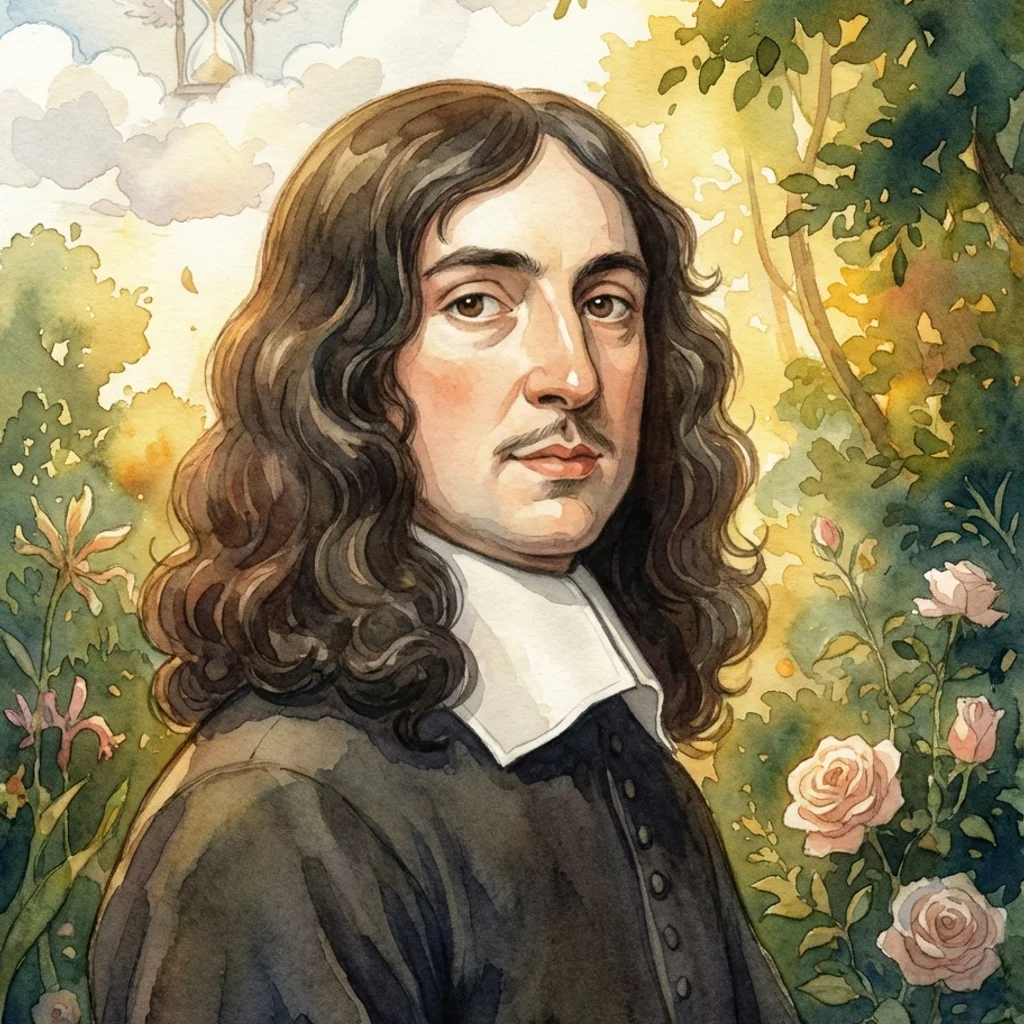
c. 1650