Notable Works
- Don Juan
- Childe Harold's Pilgrimage
- She Walks in Beauty
- The Prisoner of Chillon
- Manfred
- Darkness
George Gordon Byron, 6th Baron Byron, known simply as Lord Byron, was the most flamboyant and notorious of the Romantic poets. His scandalous personal life, revolutionary politics, and darkly passionate verse made him an international celebrity and the archetype of the “Byronic hero”—a brooding, defiant, charismatic outsider.
Early Life and Inheritance
Born in London in 1788 with a clubbed foot, Byron had a difficult childhood marked by his mother’s volatile temper and financial instability. In 1798, at age ten, he unexpectedly inherited his great-uncle’s title, becoming the 6th Baron Byron and heir to the dilapidated Newstead Abbey in Nottinghamshire.
Byron attended Harrow School and Trinity College, Cambridge, where he rebelled against authority, kept a pet bear in his rooms, and indulged in boxing, swimming, and other athletic pursuits to compensate for his disability. He also began writing poetry and engaging in passionate friendships and love affairs.
Literary Fame
In 1812, Byron published the first two cantos of “Childe Harold’s Pilgrimage,” a semi-autobiographical travelogue in verse describing his recent journey through Portugal, Spain, Albania, and Greece. The poem made him an overnight sensation. As Byron himself noted, “I awoke one morning and found myself famous.”
The poem introduced the Byronic hero—gloomy, guilt-haunted, cynical yet magnetic, wandering in exile from society. This figure, clearly based on Byron himself, captivated readers and influenced countless later works, from Emily Brontë’s Heathcliff to countless antiheroes in literature and film.
Society Scandal
Byron became the darling of London society, particularly among women. His affairs were numerous and scandalous, including a possibly incestuous relationship with his half-sister Augusta Leigh. In 1815, he married Annabella Milbanke, who bore him a daughter, Ada (who would later become Ada Lovelace, the mathematician and early computer pioneer).
The marriage lasted only a year. When Annabella left him, taking their daughter, rumors of Byron’s sexual improprieties—including bisexuality and incest—exploded. Facing social ostracism and possible legal consequences, Byron left England in 1816, never to return.
Exile and the Shelley Circle
Byron settled first in Switzerland, where he became close friends with Percy Bysshe Shelley and Mary Shelley. That famous summer of 1816 at the Villa Diodati produced Mary Shelley’s “Frankenstein” and Byron’s Gothic verse tale “The Prisoner of Chillon.” Byron and Shelley formed one of the great literary friendships, despite their different temperaments—Byron cynical and aristocratic, Shelley idealistic and radical.
Italian Years and “Don Juan”
Byron spent most of his remaining years in Italy, living in Venice, Ravenna, and Pisa. He engaged in numerous affairs, including a lasting relationship with Countess Teresa Guiccioli, and involved himself in Italian revolutionary politics against Austrian rule.
During this period, Byron wrote his masterpiece, “Don Juan” (1819-1824), an epic satirical poem left unfinished at his death. Written in ottava rima (eight-line stanzas), the poem follows the adventures of its hero with a digressive, conversational brilliance that marks Byron’s mature style. Unlike other Romantic epics, “Don Juan” is:
- Satirical and comic: Mocking social hypocrisy, warfare, and romantic pretension
- Digressive and informal: The narrator constantly interrupts the story with observations
- Anti-heroic: Don Juan is less a seducer than a passive figure seduced by women
- Politically radical: Attacking tyranny, militarism, and moral hypocrisy
Poetic Range
Beyond the Byronic hero persona, Byron’s work shows remarkable range:
- Satire: “The Vision of Judgment” brilliantly mocks Robert Southey and George III
- Lyric beauty: “She Walks in Beauty” demonstrates his gift for melody and graceful imagery
- Narrative verse: Tales like “The Corsair” and “Lara” combined exotic settings with psychological drama
- Philosophical drama: “Manfred” explores guilt, isolation, and the search for transcendence
Greek Independence
In 1823, Byron committed himself to the Greek war of independence from Ottoman rule. He used his fame and fortune to support the cause, sailing to Greece to help organize and fund military forces. He was welcomed as a hero and given command of a brigade.
However, Byron’s health declined in the marshes of Missolonghi. He fell ill with fever, and doctors’ treatments (including extensive bloodletting) likely hastened his death. He died on April 19, 1824, at age thirty-six. Greece declared national mourning, and Byron became a symbol of Philhellenism and romantic devotion to liberty.
Legacy
Byron’s death from fever while fighting for Greek independence cemented his legend as the ultimate Romantic hero. His influence extended far beyond English poetry:
- European Romanticism: He was revered in France, Germany, Russia, and throughout Europe
- The Byronic Hero: His archetype influenced countless characters in fiction, drama, and film
- Revolutionary Politics: He embodied the connection between artistic rebellion and political radicalism
- Personal Liberation: His defiance of sexual and social conventions made him an icon of individual freedom
While some Victorian critics found his work morally problematic, twentieth-century scholars recognized Byron’s satirical brilliance and technical mastery. His conversational voice, wit, and psychological insight make him far more than a creator of moody heroes. In “Don Juan” particularly, he created a comic epic that rivals Pope and anticipates the modernist long poem.
Byron lived as he wrote—excessively, passionately, rebelliously—and his life and work remain inseparable, each illuminating the other.
Influenced By
- Alexander Pope
- John Milton
- Robert Burns
Influenced
Poems by Lord Byron (1)
Browse with filters →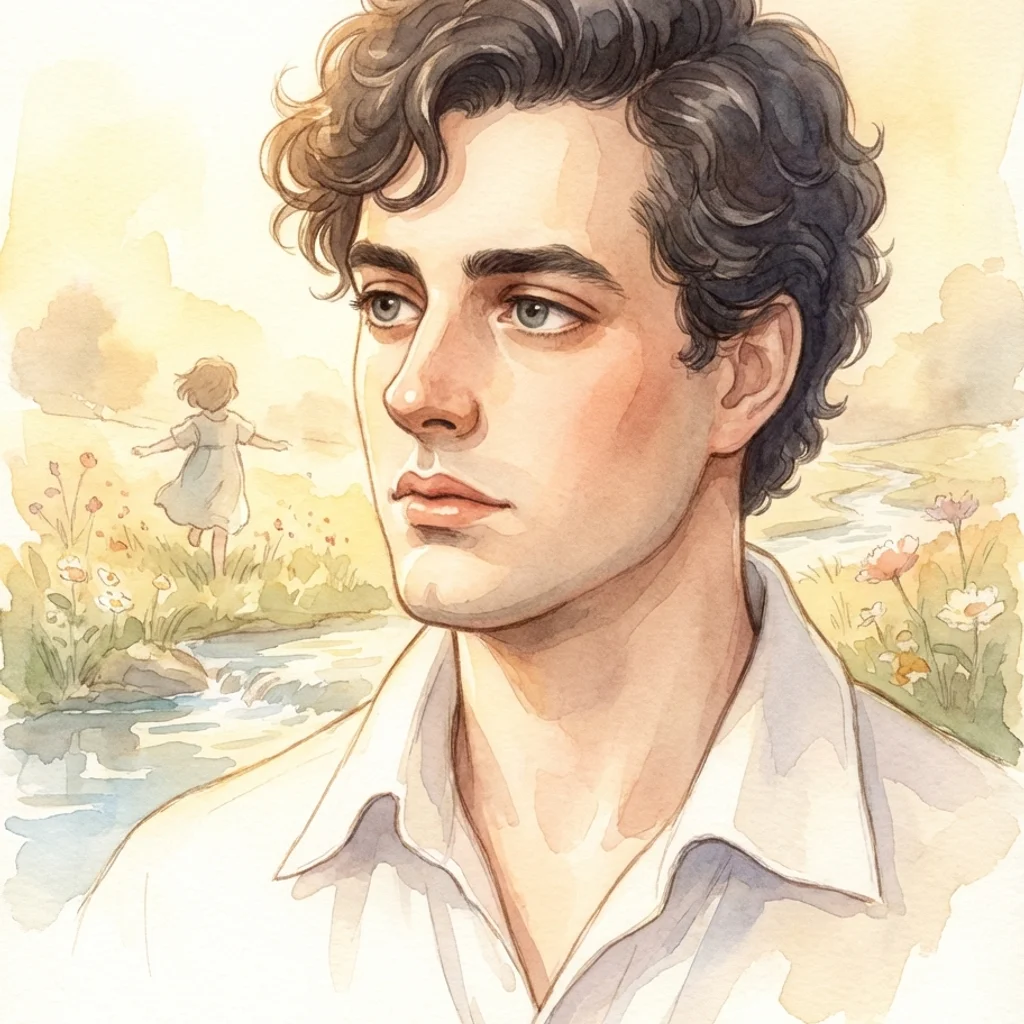
1807