The Day is Done
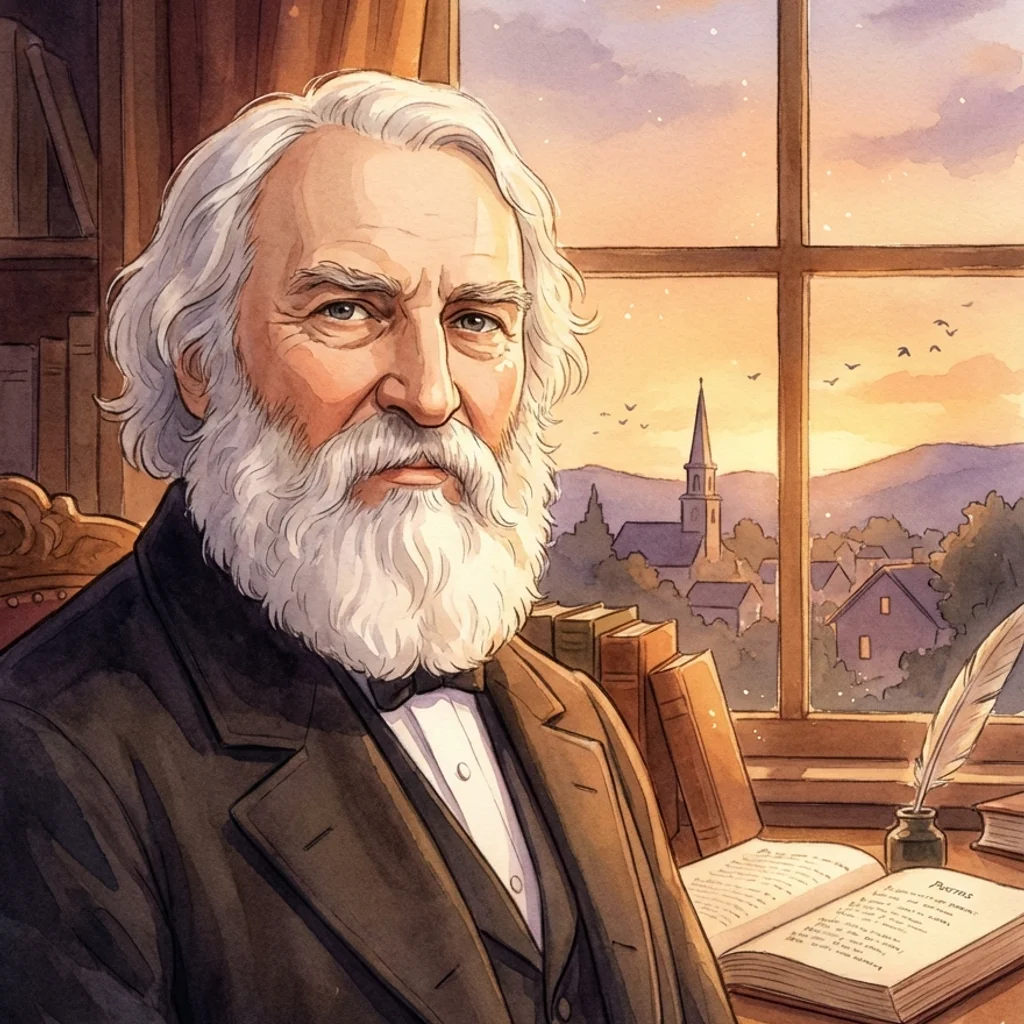 Henry Wadsworth Longfellow
Written: 1844 • Published: 1844
This poem is in the public domain and may be freely reproduced.
The day is done, and the darkness Falls from the wings of Night, As a feather is wafted downward From an eagle in his flight.
I see the lights of the village Gleam through the rain and the mist, And a feeling of sadness comes o’er me That my soul cannot resist:
A feeling of sadness and longing, That is not akin to pain, And resembles sorrow only As the mist resembles the rain.
Come, read to me some poem, Some simple and heartfelt lay, That shall soothe this restless feeling, And banish the thoughts of day.
Not from the grand old masters, Not from the bards sublime, Whose distant footsteps echo Through the corridors of Time.
For, like strains of martial music, Their mighty thoughts suggest Life’s endless toil and endeavor; And to-night I long for rest.
Read from some humbler poet, Whose songs gushed from his heart, As showers from the clouds of summer, Or tears from the eyelids start;
Who, through long days of labor, And nights devoid of ease, Still heard in his soul the music Of wonderful melodies.
Such songs have power to quiet The restless pulse of care, And come like the benediction That follows after prayer.
Then read from the treasured volume The poem of thy choice, And lend to the rhyme of the poet The beauty of thy voice.
And the night shall be filled with music, And the cares, that infest the day, Shall fold their tents, like the Arabs, And as silently steal away.
Curator's Note
Longfellow's ode to poetry's consoling power is itself deeply consoling. As evening falls, the speaker asks for a simple poem, 'Not from the grand old masters,' but something 'humble' that can soothe like rain. This is poetry as comfort food, verse as balm for the weary. The final image—'And the night shall be filled with music, / And the cares that infest the day / Shall fold their tents, like the Arabs, / And as silently steal away'—remains one of literature's loveliest metaphors for peace. In an age that values difficulty and innovation, Longfellow reminds us that poetry can simply make us feel better.
Related Poems
1922
1819
1648
1611