Paul Laurence Dunbar
1872–1906
- Born:
- Dayton, Ohio, USA
- Died:
- Dayton, Ohio, USA
Notable Works
- We Wear the Mask
- Sympathy
- When Malindy Sings
- A Negro Love Song
Paul Laurence Dunbar was the first African American poet to gain national prominence and international recognition. Writing at the turn of the 20th century, he achieved mainstream success while navigating the complex demands of writing for both Black and white audiences. His work encompasses both dialect poetry that celebrated Black life and culture, and formal verse in standard English that confronted racism and oppression.
Early Life and Education
Born in Dayton, Ohio, in 1872 to formerly enslaved parents, Dunbar grew up in modest circumstances. His mother Matilda had been enslaved in Kentucky and separated from her first two sons when they were sold away—a trauma that haunted Dunbar’s imagination and appears throughout his work. His father Joshua had escaped slavery and served in the 55th Massachusetts Infantry Regiment during the Civil War.
Dunbar showed literary promise early, publishing his first poem at sixteen. At Dayton’s Central High School, where he was the only Black student in his class, he excelled academically, edited the school newspaper, and served as president of the literary society. His classmate Orville Wright (of the Wright Brothers) printed Dunbar’s first newspaper on the printing press he and his brother Wilbur owned.
Despite his talents, racial discrimination prevented Dunbar from attending college or finding work as a journalist. He worked as an elevator operator, writing poems between floors and selling them to passengers for extra money.
Literary Breakthrough
Dunbar’s career took off in 1893 when he was invited to recite poetry at the World’s Columbian Exposition in Chicago. His first major collection, Oak and Ivy (1893), was self-published and sold primarily to elevator passengers. But it caught the attention of influential readers, including Frederick Douglass, who hired Dunbar as a clerk and became a mentor.
In 1896, William Dean Howells, the most influential literary critic in America, wrote a glowing review of Dunbar’s Majors and Minors in Harper’s Weekly. This review made Dunbar’s career, leading to publication of Lyrics of Lowly Life (1896) by a major publisher. At twenty-four, Dunbar became internationally famous.
The Dialect Question
Dunbar’s work in dialect—poems written in African American vernacular—made him famous but became a source of internal conflict. White audiences loved these poems for what they saw as charming, nostalgic portraits of plantation life. Poems like “When Malindy Sings” and “A Negro Love Song” were immensely popular, allowing Dunbar to support himself as a writer.
But Dunbar felt constrained by this success. In his poem “The Poet,” he laments: “He sang of love when earth was young, / And Love, itself, was in his lays. / But ah, the world, it turned to praise / A jingle in a broken tongue.” He wanted recognition for his formal poetry in standard English, which addressed racism, oppression, and the African American experience with greater directness.
This tension reflects broader debates in Black literature about authenticity, audience, and artistic freedom. Dunbar navigated these pressures with remarkable skill, using dialect poetry to preserve and celebrate Black culture while using standard English to critique systemic racism.
“We Wear the Mask”
“We Wear the Mask” (1896) is Dunbar’s most famous poem in standard English and one of the definitive works about the Black experience in America. The poem’s central metaphor—wearing a mask to hide true feelings and suffering—captures the psychological toll of living under racial oppression. The mask “grins and lies” to protect the wearer, hiding “our cheeks and shading our eyes” from a hostile world.
The poem’s form reinforces its meaning: the strict rhyme scheme and measured meter mirror the constraint and control required to wear the mask. The repetition of “We wear the mask” functions like a mantra of survival, while the reference to “Christ” in the final stanza adds spiritual dimensions to the suffering described.
Critics recognize the poem as an early articulation of what W.E.B. Du Bois would later call “double consciousness”—the experience of viewing oneself through the eyes of a racist society while maintaining one’s own sense of self.
“Sympathy”
Another masterpiece, “Sympathy” (1899), contains the famous lines “I know why the caged bird sings.” The poem uses the trapped bird as a metaphor for the constrained Black artist and the broader African American experience. When the bird “beats his wing / Till its blood is red on the cruel bars,” Dunbar captures both the violence of oppression and the persistence of the human spirit.
Maya Angelou would later take her title I Know Why the Caged Bird Sings from this poem, ensuring Dunbar’s metaphor continued to resonate through the 20th century.
Personal Struggles
Dunbar’s personal life was marked by struggle. In 1898, he married Alice Ruth Moore, a fellow poet and activist, but the marriage was troubled by Dunbar’s alcoholism and controlling behavior. They separated in 1902.
Dunbar’s health declined rapidly. He contracted tuberculosis and struggled with alcohol addiction, partly to manage pain from his illness. His condition was exacerbated by grueling reading tours through England and across America, where he performed for white audiences who often wanted only his dialect poems.
His later poetry grows darker, more bitter, confronting mortality and disappointment. Yet even in illness, he continued writing, producing four novels, four short story collections, and numerous poems before his death at thirty-three.
Legacy
Dunbar died in 1906, leaving behind a substantial body of work created in just fifteen years. He published twelve books of poetry, four novels, and four short story collections—an astonishing output given his short life.
His influence on African American literature is immeasurable. The Harlem Renaissance writers who emerged in the 1920s—Langston Hughes, Countee Cullen, Claude McKay—all acknowledged Dunbar as a pioneer who proved Black writers could achieve mainstream success while addressing racial themes.
Dunbar’s home in Dayton is now a National Historic Landmark. His poems continue to be widely anthologized and studied, with “We Wear the Mask” and “Sympathy” regarded as essential American poems.
Critical Reassessment
For decades, some critics dismissed Dunbar’s dialect poetry as accommodationist or stereotypical. More recent scholarship recognizes these poems’ complexity and their role in preserving and validating Black culture during a period of intense oppression. His formal poetry is now recognized as pioneering work in African American protest literature.
Dunbar remains a figure of both triumph and tragedy—a brilliant poet who achieved remarkable success against enormous odds but died young, exhausted by the physical and psychological demands of being a Black artist in a racist society. His work continues to speak to experiences of marginalization, the cost of survival, and the endurance of the human spirit.
Influenced By
- William Wordsworth
- John Keats
- Percy Bysshe Shelley
- James Whitcomb Riley
Poems by Paul Laurence Dunbar (1)
Browse with filters →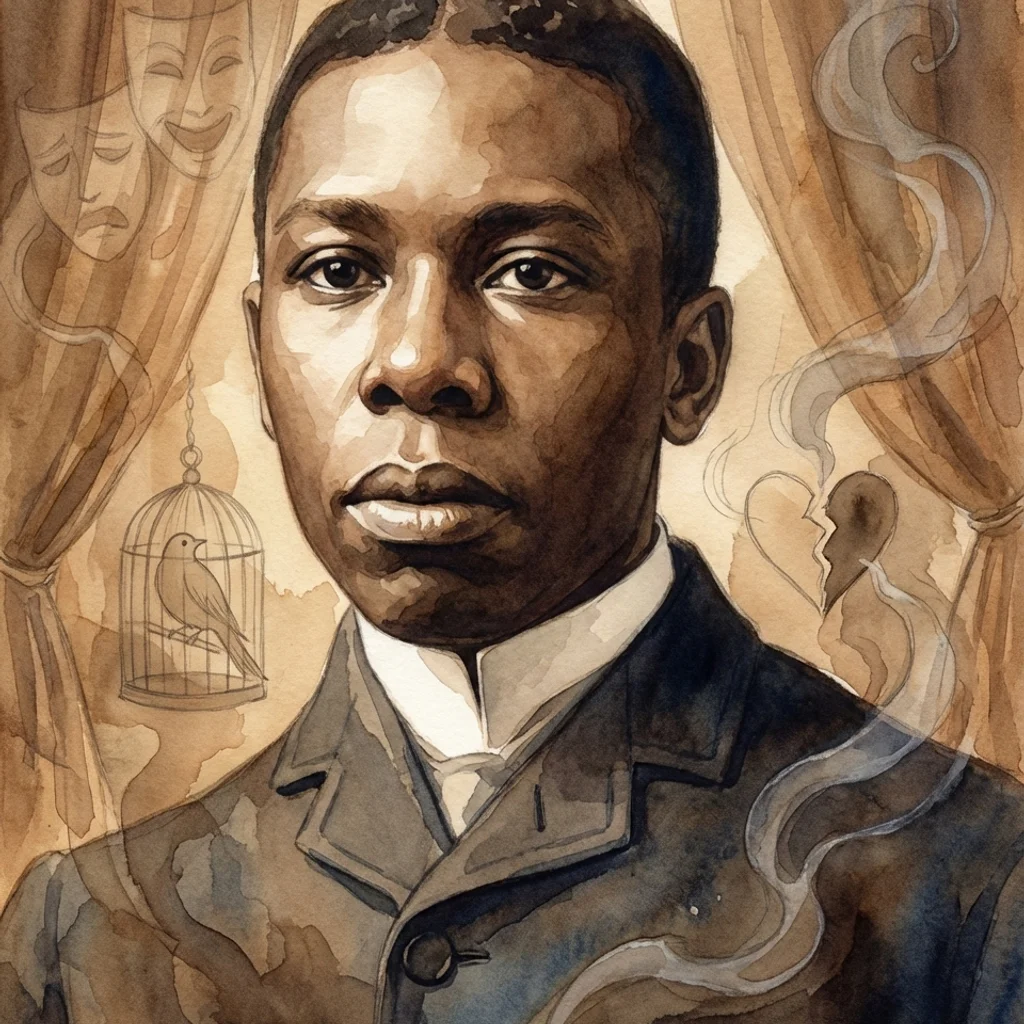
1895