Notable Works
- Richard Cory
- Miniver Cheevy
- Mr. Flood's Party
- Luke Havergal
- Eros Turannos
- The Man Against the Sky
Edwin Arlington Robinson was an American poet who created a gallery of psychologically complex characters in verse that bridged nineteenth-century narrative traditions and twentieth-century modernism. Best known for short dramatic monologues set in the fictional Tilbury Town (based on his native Gardiner, Maine), Robinson explored themes of failure, isolation, and quiet desperation with irony and compassion. The first poet to win the Pulitzer Prize three times, he demonstrated that traditional forms could convey modern psychological insights.
Early Life in Maine
Born in 1869 in Head Tide, Maine, and raised in Gardiner, Robinson grew up in a New England town whose decline from prosperity to economic stagnation would provide the setting for his greatest poems. His family’s fortunes declined during his youth—his father’s business failed, his mother became an invalid, and both parents died while Robinson was young.
Robinson’s older brothers had dramatic, troubled lives that influenced his work. His brother Dean became addicted to morphine while practicing medicine; his brother Herman married the woman Robinson himself loved and descended into alcoholism. These family tragedies gave Robinson intimate knowledge of failure and disappointment, themes that would dominate his poetry.
Harvard and Early Struggles
Robinson attended Harvard as a special student for two years (1891-93) before financial problems forced him to leave without a degree. These years introduced him to literature and philosophy but also confirmed his sense of being an outsider. He began writing seriously, developing the clear, austere style that would characterize his work.
The 1890s were a period of poverty and struggle. Robinson worked at various jobs, lived in a New York boarding house, and drank heavily. He published his first collection, The Torrent and the Night Before (1896), and an expanded version, The Children of the Night (1897), at his own expense. The books received little notice, though they contained early versions of “Richard Cory” and “Luke Havergal.”
Breakthrough and Recognition
Robinson’s fortunes changed when President Theodore Roosevelt discovered his work. Moved by the poems and learning of Robinson’s poverty, Roosevelt secured him a position in the New York Customs House in 1905. This sinecure gave Robinson financial stability and time to write. Roosevelt also wrote a favorable review, bringing Robinson to wider attention.
The Town Down the River (1910) and The Man Against the Sky (1916) established Robinson’s reputation. These collections showed his characteristic style fully developed: blank verse or traditional forms, psychological depth, ironic detachment, and compassion for life’s failures.
Tilbury Town
Robinson’s Tilbury Town poems create a community of interconnected characters, each poem a psychological portrait. Like Sherwood Anderson’s Winesburg, Ohio or Edgar Lee Masters’s Spoon River Anthology, Robinson’s work maps a small-town America of hidden lives and quiet desperation.
“Richard Cory” exemplifies this method. In sixteen lines, the poem presents a man who seemed to have everything—wealth, charm, grace—and ends with his suicide: “And Richard Cory, one calm summer night, / Went home and put a bullet through his head.” The poem’s flat delivery and the shock of the ending create a powerful effect, warning against assumptions about others’ inner lives.
“Miniver Cheevy” portrays a romantic who resents being born too late for the age of chivalry: “Miniver Cheevy, child of scorn, / Grew lean while he assailed the seasons.” The poem is sympathetic yet critical, understanding Miniver’s discontent while recognizing his self-indulgent escapism. The final stanza’s repetition—“Miniver coughed, and called it fate, / And kept on drinking”—is devastating.
Psychological Insight
Robinson was a poet of failure, loneliness, and inner conflict. His characters include alcoholics, romantics, failures, and people whose public faces conceal private desperation. He wrote with particular sensitivity about those who feel displaced in time, who cannot reconcile ideals with reality, or who carry secret griefs.
“Mr. Flood’s Party” depicts an elderly alcoholic drinking alone, toasting his absent friends and his younger self. The poem is both comic and heartbreaking, its mock-heroic tone underlining the pathos: “Alone, as if enduring to the end / A valiant armor of scarred hopes outworn.” Robinson finds dignity in Flood’s solitary ritual without sentimentalizing it.
“Eros Turannos” (the title is Greek for “Love the Tyrant”) tells of a woman trapped in a destructive marriage. The poem explores her self-deception and the town’s failure to understand her situation. Robinson’s psychological acuity and his understanding that people half-choose their suffering make this one of his most powerful poems.
Longer Works
In his later career, Robinson wrote long narrative poems on Arthurian themes and psychological studies. Merlin (1917), Lancelot (1920), and Tristram (1927) retell medieval legends with modern psychological realism. Tristram was a bestseller and won Robinson his third Pulitzer Prize, though these long poems are less read today than his short dramatic lyrics.
He also wrote book-length character studies like Roman Bartholow (1923) and Cavender’s House (1929). These works show Robinson’s ambition to write poetry that could rival novels in psychological depth, though critics have questioned whether the poems’ length is justified by their content.
Poetic Style
Robinson’s style is characterized by:
- Traditional forms: He used blank verse, sonnets, and various stanza forms with skill
- Plain diction: Clear language without rhetorical ornament
- Irony: A persistent gap between appearance and reality
- Understatement: Powerful emotions conveyed through restraint
- Psychological depth: Characters revealed through what they hide as much as what they show
- Ambiguity: Refusal to provide simple moral judgments
His style was unfashionable during the height of imagism and free verse experimentation, yet it proved durable. Robinson showed that traditional forms could convey modern sensibilities.
Later Years
From 1911 until his death, Robinson spent summers at the MacDowell Colony in New Hampshire, where he found community with other artists and productive working conditions. These summers were the most stable period of his otherwise rootless life.
Robinson never married and remained intensely private. His love for his brother’s wife, Emma, shaped his emotional life but remained unfulfilled. This experience of distant, impossible love informed many of his poems about romantic disappointment.
He died in 1935 of pancreatic cancer, widely honored but never having achieved the popular success of more accessible poets. His funeral was attended by many of America’s leading writers, testimony to the respect he commanded among his peers.
Legacy and Influence
Robinson’s influence on American poetry has been subtle but persistent. Robert Frost admired his work and learned from his dramatic monologues. James Dickey, Weldon Kees, and other mid-century poets acknowledged his example. His ability to create narratives in verse while maintaining poetic compression influenced later narrative poets.
His reputation has fluctuated. At his death, he was considered one of America’s greatest poets. Mid-century critics found him too traditional and too dark. Recent decades have seen renewed appreciation for his psychological acuity, his technical skill, and his unflinching examination of failure and disappointment.
Robinson demonstrated that poetry could explore ordinary lives with the same intensity that novels brought to such subjects. His small-town failures, dreamers, and sufferers anticipated later American poetry’s democratic subjects. His ironic compassion—the ability to understand without condoning, to sympathize without sentimentalizing—remains a model for poets interested in human complexity.
At his best, Robinson created poems of perfect economy and insight, capturing in a few lines entire lives of quiet suffering and muted hope. His work speaks to anyone who has felt displaced, disappointed, or diminished by life while maintaining dignity and continuing on. That he found such subjects worthy of poetry and treated them with artistry and respect ensures his permanent place in American literature.
Influenced By
- Thomas Hardy
- Robert Browning
- Classical literature
Poems by Edwin Arlington Robinson (1)
Browse with filters →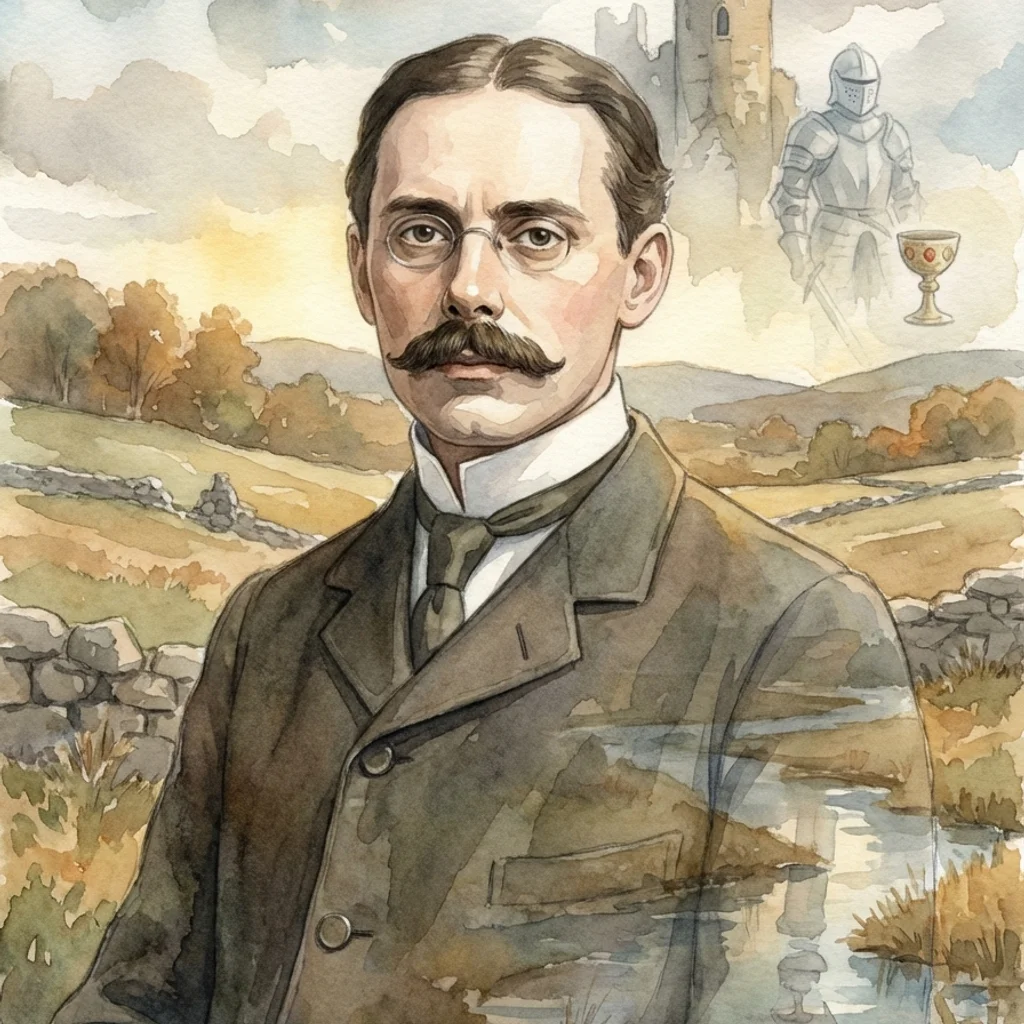
1910