Notable Works
- Sea-Fever
- Cargoes
- The Everlasting Mercy
- Reynard the Fox
- Salt-Water Ballads
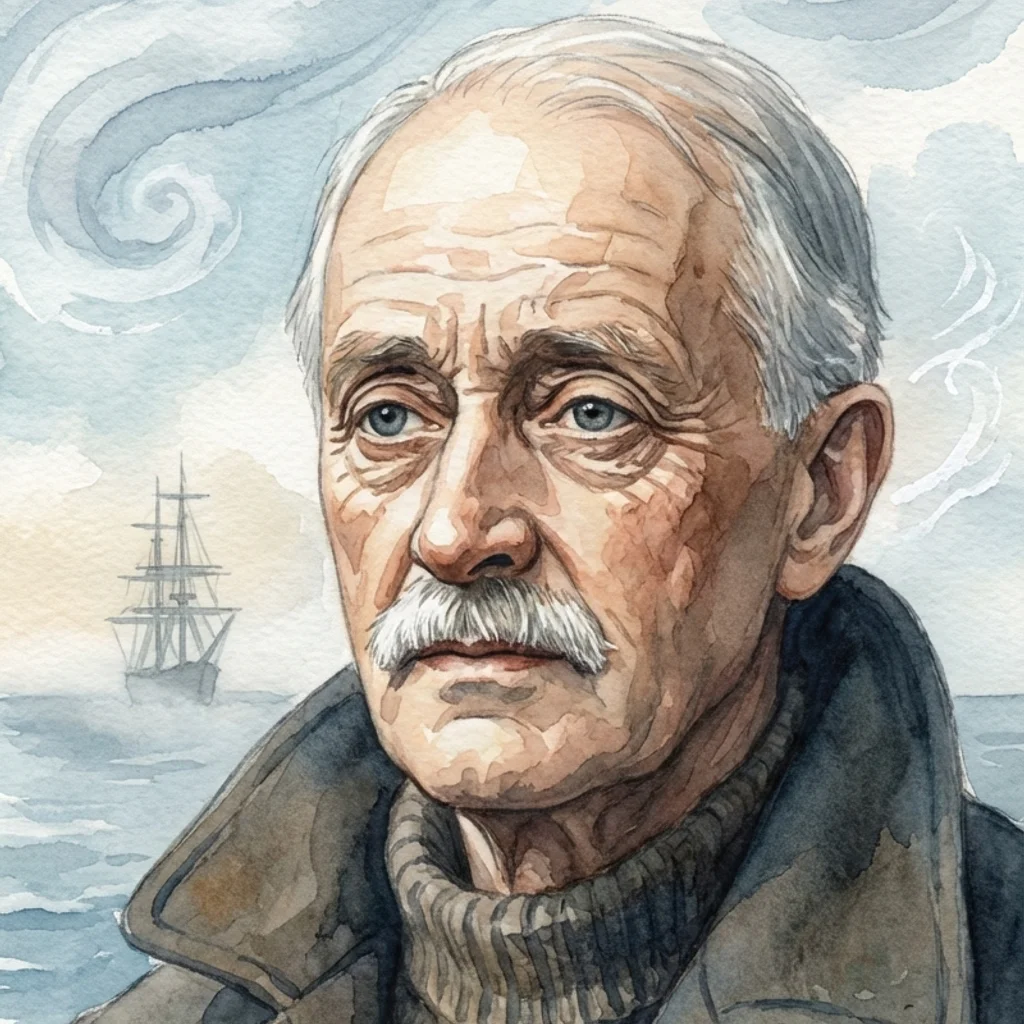
John Masefield was an English poet and writer who served as Poet Laureate of the United Kingdom from 1930 until his death in 1967, one of the longest tenures in the position’s history. Best known for his sea poetry, Masefield’s work celebrates the natural world, adventure, and the lives of ordinary people with a musicality and narrative drive that made his verse enormously popular.
Early Life and Maritime Experience
Born in Ledbury, Herefordshire, in 1878, Masefield experienced tragedy early when his mother died during his sixth birthday party. His father’s subsequent mental breakdown left Masefield and his siblings in the care of relatives. At thirteen, he was sent to the HMS Conway, a naval training vessel, to prepare for a life at sea.
Masefield’s brief maritime career provided the raw material for his most famous poems. He sailed to Chile aboard a windjammer in 1894 but suffered such severe seasickness that he deserted ship in New York. For several years, he worked various jobs in America—in a carpet factory, as a bartender—while reading voraciously and beginning to write poetry.
Return to England and Literary Success
Masefield returned to England in 1897 and gradually established himself in London’s literary world. His first collection, Salt-Water Ballads (1902), included “Sea-Fever,” which would become one of the most beloved poems in English literature. With its opening line, “I must down to the seas again, to the lonely sea and the sky,” and its insistent rhythms echoing the motion of waves, the poem captures both the romance and the essential loneliness of maritime life.
His narrative poem The Everlasting Mercy (1911) shocked and electrified readers with its colloquial language and unflinching portrayal of working-class life. The poem tells the story of Saul Kane, a poacher and drunkard who experiences religious conversion. Its frank treatment of drinking, fighting, and cursing was revolutionary for poetry of its time.
Poetic Style and Themes
Masefield’s poetry is characterized by:
- Narrative vigor: His long poems tell gripping stories with cinematic vividness
- Accessibility: He wrote in clear, direct language that ordinary readers could appreciate
- Rhythmic energy: His meters often echo the sounds of his subjects—galloping horses, rolling seas
- Democratic subjects: He celebrated laborers, sailors, and country folk rather than aristocrats
- Romantic adventure: His work combines realistic detail with a sense of wonder and possibility
“Cargoes,” another of his famous poems, demonstrates his gift for concrete imagery and historical sweep. The poem contrasts three ships from different eras—a quinquireme from ancient Nineveh, a Spanish galleon, and a British coaster—using the sounds and textures of their cargoes to evoke entire civilizations.
Later Career and Poet Laureateship
In 1930, Masefield was appointed Poet Laureate, succeeding Robert Bridges. He took the ceremonial duties seriously, writing poems for royal occasions and national events. Unlike some laureates who produced dutiful but uninspired verse for official occasions, Masefield brought his characteristic energy and sincerity to these works.
During World War I, he had served with the Red Cross in France and on the Gallipoli front, experiences that deepened his poetry’s engagement with suffering and heroism. His wartime prose works, including Gallipoli (1916), are vivid historical accounts that complement his poetic output.
Prose and Drama
Beyond poetry, Masefield was a prolific writer of novels, plays, and children’s books. His novels Sard Harker (1924) and Odtaa (1926) are adventure tales in the tradition of Robert Louis Stevenson. His children’s books, including The Midnight Folk (1927) and The Box of Delights (1935), have become classics of British children’s literature, blending mystery, magic, and English countryside settings.
Legacy
Masefield’s reputation declined somewhat in the later twentieth century as modernist critics valued difficulty and experimental form over his more traditional narrative style. However, his best poems have never lost their power to move readers. “Sea-Fever” continues to be memorized by schoolchildren and quoted by sailors. His combination of realistic observation, romantic feeling, and rhythmic mastery represents an important strand of early twentieth-century poetry that valued communication with a broad audience.
His long tenure as Poet Laureate and his dedication to making poetry accessible helped maintain poetry’s place in British public life. At his best, Masefield achieved what few poets can: verse that is simultaneously popular and genuinely excellent, speaking to both heart and mind with equal force.
Influenced By
- Geoffrey Chaucer
- William Shakespeare
- John Keats