Notable Works
- The Windhover
- Pied Beauty
- God's Grandeur
- Spring and Fall
- As Kingfishers Catch Fire
- Carrion Comfort
Gerard Manley Hopkins was a Victorian Jesuit priest whose innovative poetry went unpublished during his lifetime but profoundly influenced twentieth-century verse after its posthumous appearance in 1918. Hopkins developed a revolutionary poetic technique he called “sprung rhythm” that broke with conventional Victorian metrics, and his densely textured language, compound words, and celebration of nature’s “inscape” anticipated modernist experimentation. His work represents a unique fusion of intense religious devotion, linguistic innovation, and sensuous engagement with the natural world.
Early Life and Conversion
Born in Stratford, Essex, in 1844, Hopkins grew up in a prosperous, artistic family. His father was a marine insurance adjuster who wrote poetry; his mother was devout and literary. Hopkins showed early talent in drawing and poetry, winning a school poetry prize at age fifteen.
At Balliol College, Oxford, Hopkins studied classics and came under the influence of the Oxford Movement, which sought to restore Catholic elements to Anglicanism. More dramatically, he encountered John Henry Newman, the movement’s leader who had converted to Catholicism. In 1866, Hopkins followed Newman’s path, converting to Roman Catholicism—a decision that devastated his Anglican family and shaped the rest of his life.
Jesuit Vocation and Poetic Silence
In 1868, Hopkins entered the Jesuit order, one of Catholicism’s most intellectually rigorous and demanding communities. Upon entering, he burned his early poems, believing poetry incompatible with his vocation. For seven years, he wrote almost nothing, devoting himself to study, teaching, and spiritual formation.
This silence broke in 1875 when his rector suggested Hopkins write a poem about the Deutschland, a ship that had wrecked with the loss of five Franciscan nuns among the drowned. The result, “The Wreck of the Deutschland,” was Hopkins’s most ambitious poem—a complex ode that introduced his revolutionary “sprung rhythm” and his mature poetic vision. The Jesuit magazine to which he submitted it declined to publish it, finding it too difficult.
Sprung Rhythm and Poetic Innovation
Hopkins developed “sprung rhythm,” a metrical system based on stressed syllables rather than the alternating stressed and unstressed syllables of traditional English verse. Each foot contains one stressed syllable and any number of unstressed syllables, creating rhythms closer to natural speech and to the pounding rhythms of Welsh and Old English verse.
This innovation allowed Hopkins to pack multiple unstressed syllables together, creating rushing effects, or to place stressed syllables side by side for emphasis. The result is poetry of extraordinary rhythmic energy and compression. Reading Hopkins aloud reveals the power of this technique, though his poems can seem difficult on the page.
Hopkins also developed dense patterns of alliteration, assonance, and internal rhyme, creating sound textures unprecedented in English poetry. He invented compound words and revived archaic terms, pushing English’s expressive possibilities.
Nature Poetry and Inscape
Hopkins’s finest poems celebrate the natural world with intense, almost ecstatic attention. He believed each created thing possessed “inscape”—its essential, individual pattern or design—and that careful observation could reveal this inscape, which in turn manifested God’s presence.
“Pied Beauty” praises “dappled things”—“skies of couple-colour as a brinded cow,” “rose-moles all in stipple upon trout that swim”—in language that mirrors the variety it celebrates. The poem’s catalog of particulars leads to praise: “He fathers-forth whose beauty is past change: / Praise him.” The poem’s form itself is innovative—a “curtal” or shortened sonnet.
“The Windhover,” dedicated “To Christ our Lord,” describes a falcon in flight with language that soars and dives with the bird: “I caught this morning morning’s minion, kingdom of daylight’s dauphin, dapple-dawn-drawn Falcon.” The poem moves from observation to religious meditation, seeing the bird’s mastery as an emblem of Christ.
Sprung Rhythm in Practice
“God’s Grandeur” demonstrates sprung rhythm’s power. The opening line—“The world is charged with the grandeur of God”—places four strong stresses in succession (“world,” “charged,” “gran-,” “God”), creating emphatic declaration. The poem contrasts divine glory with human destruction of nature, ending with renewal: “Because the Holy Ghost over the bent / World broods with warm breast and with ah! bright wings.”
The exclamatory “ah!”—characteristic of Hopkins’s emotional directness—interrupts the line’s flow, expressing wonder that breaks through syntactical structure. This willingness to fracture grammar for expressive purposes anticipates modernist techniques.
Dark Sonnets
Hopkins’s later years in Ireland, where he taught classics at University College Dublin, were marked by depression and spiritual desolation. The “terrible sonnets” or “sonnets of desolation” written during this period are among his most powerful works, expressing spiritual crisis with unflinching honesty.
“Carrion Comfort” begins with desperate resistance to despair: “Not, I’ll not, carrion comfort, Despair, not feast on thee.” The poem wrestles with God’s apparent cruelty, asking, “why wouldst thou rude on me / Thy wring-world right foot rock?” The violent imagery and contorted syntax enact the speaker’s spiritual agony.
“I wake and feel the fell of dark, not day” describes depression in physical terms: “I am gall, I am heartburn.” These poems refuse easy consolation, presenting faith as struggle rather than comfort. Their honesty about religious doubt and suffering makes them especially powerful.
“Spring and Fall”
One of Hopkins’s most accessible poems, “Spring and Fall: To a Young Child,” addresses Margaret grieving over autumn leaves falling. The poem gently reveals that she unconsciously mourns her own mortality: “It is the blight man was born for, / It is Margaret you mourn for.” The poem’s simple language and regular rhythm contrast with Hopkins’s more compressed style, showing his range.
Isolation and Posthumous Publication
Hopkins shared his poems only with a few friends, particularly Robert Bridges, who would become Poet Laureate. Bridges recognized Hopkins’s genius but found the poems too strange for publication. Hopkins died in 1889 of typhoid fever at age forty-four, his poetry almost entirely unknown.
Bridges finally published Hopkins’s Poems in 1918, nearly thirty years after the poet’s death. The timing was perfect—modernist experimentation had prepared readers for Hopkins’s innovations. The book was a revelation, showing that Victorian-era experiments had anticipated twentieth-century developments.
Influence on Modernism
Hopkins’s influence on modern poetry has been profound. His sprung rhythm anticipated free verse’s flexibility while maintaining structure. His dense language and compound words influenced poets like Dylan Thomas and e.e. cummings. His fusion of precise observation and metaphysical meditation inspired later religious poets.
W.H. Auden, Stephen Spender, and C. Day-Lewis were among the first to recognize Hopkins’s importance. His influence spread to American poets including Elizabeth Bishop and Robert Lowell. Contemporary poets continue to learn from his rhythmic innovations and linguistic density.
Religious Vision
Hopkins’s poetry represents religious poetry at its most intense. Unlike devotional verse that offers comfort or didactic verse that teaches doctrine, Hopkins’s poems enact spiritual experience—ecstasy, struggle, doubt, praise. His Jesuit training in finding “God in all things” manifests in his attention to natural particulars as revelations of divine presence.
His sexuality—he appears to have been attracted to men—existed in permanent tension with his vows. Some critics read homoerotic subtexts in his nature descriptions and his poems about male beauty. Whether this tension enriched or tormented his work remains debated, but it clearly contributed to the emotional intensity of his verse.
Poetic Achievement
Hopkins’s small body of work—fewer than fifty finished poems—includes a remarkably high percentage of masterpieces. His innovations in rhythm, sound, and diction expanded poetry’s possibilities. His ability to make language enact meaning rather than merely convey it places him among poetry’s greatest craftsmen.
He demonstrated that religious poetry could be both orthodox in belief and radical in expression, that innovation and tradition could coexist, and that close attention to the physical world could be a spiritual discipline. His work bridges Victorian religiosity and modernist experimentation, belonging fully to neither period while influencing both.
Legacy
Hopkins’s posthumous publication proves that great poetry can wait for its audience. His innovations—too strange for his contemporaries—became influential once modernism had prepared readers to appreciate them. His work reminds us that literary history isn’t linear; Hopkins was writing modernist poetry in the 1870s, decades before modernism existed as a movement.
His poetry rewards close reading and rereading. Initially, his compression and syntactic complexity can seem forbidding, but familiarity reveals extraordinary richness. His celebration of nature’s beauty, his spiritual intensity, his metrical innovations, and his linguistic inventiveness ensure his permanent place among English poetry’s masters.
Hopkins proved that technical innovation could serve rather than undermine religious content, that tradition and experimentation could be allies, and that language could be pushed to extremes while remaining meaningful. His work continues to astonish readers with its beauty, power, and originality more than a century after its first publication.
Influenced By
- John Keats
- George Herbert
- Medieval Welsh poetry
Poems by Gerard Manley Hopkins (1)
Browse with filters →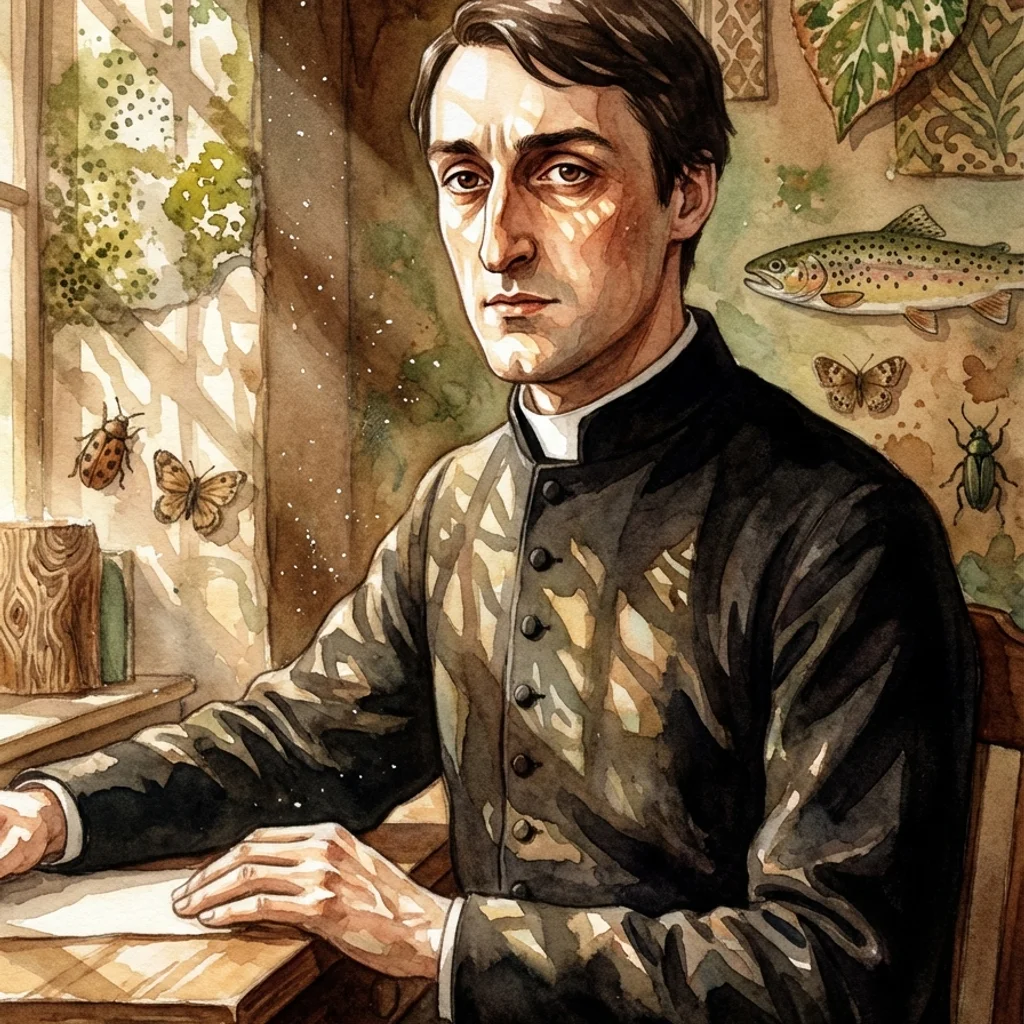
1877