Notable Works
- A Shropshire Lad
- Last Poems
- More Poems
- The Name and Nature of Poetry
Alfred Edward Housman was a classical scholar of exceptional brilliance and a poet of deceptive simplicity. His slender volume “A Shropshire Lad” (1896) became one of the most beloved poetry collections in English, its melancholy lyrics about mortality, lost youth, and doomed soldiers speaking to generations of readers.
Early Life and Education
Born in Fockbury, Worcestershire, in 1859, Housman was the eldest of seven children. His mother died on his twelfth birthday, a loss that profoundly affected him. He excelled academically, winning a scholarship to St John’s College, Oxford, where he studied classics.
At Oxford, Housman’s academic promise seemed assured, but in a shocking turn, he failed his final examinations in 1881. The reasons remain debated—he may have neglected required subjects to focus obsessively on textual criticism, or he may have been emotionally devastated by his unrequited love for his roommate, Moses Jackson, an athlete and scientist who could not reciprocate Housman’s feelings.
Years in the Wilderness
After Oxford, Housman worked as a clerk in the Patent Office in London for ten years while living in rooms with Moses Jackson and Jackson’s brother Adalbert. During this period, he taught himself to become one of the world’s leading scholars of Latin poetry, publishing brilliant articles on textual criticism that established his reputation.
His precise, devastating scholarship focused on the Roman poets Propertius, Juvenal, Lucan, and especially Manilius, whose astronomical poem “Astronomica” Housman spent decades editing. His prefaces to these editions are legendary for their scathing attacks on the incompetence of previous editors.
Academic Career
In 1892, based solely on his published scholarship, Housman was appointed Professor of Latin at University College London. In 1911, he became Kennedy Professor of Latin at Cambridge, a position he held until his death.
Housman was a formidable, exacting teacher and scholar, maintaining the highest standards and suffering fools not at all. His lectures were precise, brilliant, and sometimes cruelly witty at others’ expense. He insisted on the strictest textual accuracy and devoted his life to establishing correct readings of ancient texts.
“A Shropshire Lad”
In 1896, Housman published “A Shropshire Lad” at his own expense. The collection of sixty-three poems presented a landscape of the Shropshire countryside (a place Housman barely knew) peopled by doomed young men—soldiers marching to death, criminals hanged, lovers betrayed, athletes whose glory fades.
The poems are characterized by:
- Formal perfection: Simple ballad meters and quatrains, flawlessly executed
- Melancholy themes: Death, loss, the brevity of youth and beauty
- Classical restraint: Emotion controlled through traditional form
- Accessible language: Simple diction creating profound effects
- Ironic tone: An undertone of bitter fatalism beneath lyrical beauty
Initially, the book sold slowly, but during the Second Boer War (1899-1902) and especially World War I, its themes of young men dying far from home resonated powerfully. It became one of the bestselling poetry books of the era, cherished by soldiers in the trenches.
Poetic Themes
Housman’s poetry repeatedly returns to certain preoccupations:
- Mortality and youth: The fleeting nature of beauty and life
- Doomed love: Unfulfilled desire and loss
- Soldiers and death: Young men dying in battle
- Alienation: The outsider who doesn’t belong
- Stoic acceptance: Facing inevitable suffering with courage
- The indifference of nature: Beauty that persists despite human grief
Beneath the rural English imagery lies deeply personal pain—Housman’s homosexuality, impossible in his era to express openly, suffuses the poems with coded longing and loss.
Later Collections
Housman published only one more collection during his lifetime, “Last Poems” (1922), which he produced believing he was near death. The poems continued his characteristic themes with even greater technical mastery and bleakness. “More Poems” appeared posthumously in 1936, assembled by his brother Laurence.
His total poetic output was small—about 175 poems—but their impact was enormous. He wrote only when inspiration seized him, refusing to force composition or to publish anything that didn’t meet his exacting standards.
The Scholar and the Poet
Housman maintained a strict division between his scholarly and poetic work. He regarded his poetry as secondary to his classical scholarship and rarely discussed it publicly. His 1933 lecture “The Name and Nature of Poetry” offered rare insights into his poetic philosophy, arguing that poetry’s essence is not intellectual but emotional and physical—“a morbid secretion, like the pearl in the oyster.”
He dismissed much admired poetry as mere verse, insisting that true poetry produces a physical response, making the hair stand on end or bringing tears to the eyes. His own poems, for all their classical restraint, achieve exactly this visceral power.
Personal Life
Housman never married and lived a reclusive, austere life devoted to scholarship. His love for Moses Jackson remained the central emotional fact of his existence. When Jackson, who had emigrated to India and later Canada, was dying in 1922, Housman visited him one last time. The poems “More Poems” contains some of his most personal and heartbreaking verses about this impossible love.
Death and Legacy
Housman died in Cambridge in 1936, having achieved eminence as both scholar and poet. His scholarly editions remain standard references, models of textual criticism. His poetry, while sometimes dismissed by modernist critics as nostalgic and old-fashioned, has endured through its technical perfection and emotional power.
Influence and Reputation
Housman influenced later poets including Philip Larkin and other Movement poets, who admired his formal control and emotional restraint. His combination of classical learning, technical mastery, and profound feeling created poems that are simultaneously simple and complex, traditional and deeply personal.
“A Shropshire Lad” remains widely read, set to music by numerous composers, and quoted at memorials and funerals. Its vision of mortality, courage, and loss—compressed into perfect crystalline lyrics—speaks to fundamental human experiences across generations. Housman demonstrated that traditional forms and simple language, handled with absolute mastery, could create poetry of enduring power.
Influenced By
- Horace
- Heine
- Greek and Latin lyric poets
Influenced
- Thomas Hardy
- Edward Thomas
Poems by A.E. Housman (1)
Browse with filters →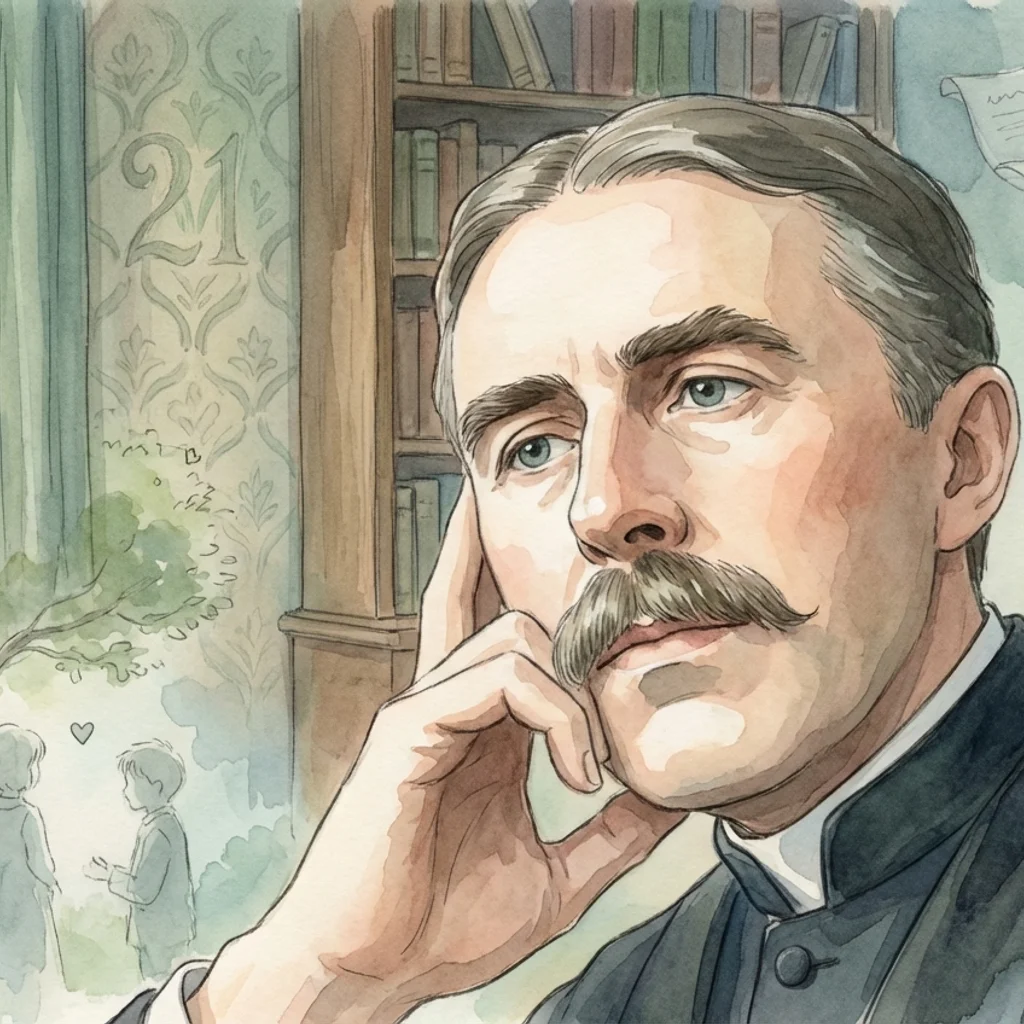
1896