Notable Works
- The Rime of the Ancient Mariner
- Kubla Khan
- Christabel
- Frost at Midnight
- Dejection: An Ode
Samuel Taylor Coleridge was one of the founders of English Romanticism and among the most brilliant and frustrating figures in literary history. His greatest poems—“The Rime of the Ancient Mariner,” “Kubla Khan,” “Christabel”—are among the most magical and influential in English, yet his poetic output was remarkably small for a writer of his stature. A philosopher, critic, and conversationalist of genius, Coleridge’s life was marked by extraordinary promise partially unfulfilled, plagued by opium addiction, ill health, and self-doubt. Nevertheless, his influence on poetry, criticism, and philosophy has been immense.
Early Life and Education
Born in Ottery St Mary, Devon, in 1772, Coleridge was the youngest of ten children of a vicar. His father died when he was nine, and he was sent to Christ’s Hospital school in London, where he proved brilliant but eccentric. He read voraciously, particularly philosophy and poetry, and began forming the intellectual ambitions that would shape his career.
At Jesus College, Cambridge, Coleridge excelled academically but lived chaotically. He ran up debts, briefly enlisted in the army under a false name (quickly bought out by his brothers), and left Cambridge in 1794 without a degree. These patterns—brilliant achievement undermined by impractical idealism and self-destructive behavior—would characterize his entire life.
Meeting Wordsworth
In 1795, Coleridge met William Wordsworth, beginning the most important literary friendship of his life. The two poets stimulated each other’s work, discussing poetry, philosophy, and politics while walking through the English countryside. This partnership produced Lyrical Ballads (1798), the volume that inaugurated English Romanticism.
Lyrical Ballads contained Wordsworth’s poems of rustic life in plain language and Coleridge’s “The Rime of the Ancient Mariner,” which adopted a medieval ballad form to create a supernatural tale unlike anything in contemporary poetry. The volume’s preface (written by Wordsworth with Coleridge’s input) articulated Romantic principles: poetry should use common language, address common subjects, and value feeling and imagination.
“The Rime of the Ancient Mariner”
Coleridge’s greatest poem tells of a sailor who shoots an albatross and suffers supernatural punishment. The poem combines archaic ballad meter with psychological depth, creating a tale that works as both adventure story and spiritual allegory.
The mariner’s killing of the albatross—an apparently motiveless act—brings death to his crewmates and begins his isolation: “Alone, alone, all, all alone, / Alone on a wide wide sea!” His redemption comes through blessing the water snakes he had previously despised: “A spring of love gushed from my heart, / And I blessed them unaware.”
The poem explores guilt, redemption, the relationship between humanity and nature, and the power of storytelling itself. Its famous lines—“Water, water, every where, / Nor any drop to drink”—have entered the language. The poem’s combination of natural and supernatural, psychological realism and dream logic, influenced later poetry profoundly.
“Kubla Khan”
Perhaps the most mysterious poem in English, “Kubla Khan” was allegedly composed in an opium-induced dream-state and left unfinished when Coleridge was interrupted by “a person from Porlock.” The poem’s subtitle, “A Vision in a Dream,” and Coleridge’s preface explaining its composition have made it a touchstone for discussions of creativity and the unconscious.
The poem’s opening—“In Xanadu did Kubla Khan / A stately pleasure-dome decree”—creates an exotic, dreamlike world of impossible geography. The “damsel with a dulcimer” in the final stanza and the poet’s declaration that “I would build that dome in air” make the poem self-referential, about poetic creation itself.
Whether Coleridge’s story of the poem’s composition is true or a Romantic myth he constructed remains debated. Either way, the poem’s fragmentary, visionary quality has made it endlessly fascinating. Its influence on later poetry—particularly Symbolist and Surrealist verse—has been enormous.
“Christabel”
“Christabel,” another incomplete work, tells a gothic tale of the innocent Christabel and the mysterious Geraldine in a medieval setting. Written in a novel accentual meter that Coleridge claimed to have invented, the poem creates an atmosphere of supernatural menace and sexual tension that has invited psychoanalytic and feminist readings.
The poem’s incompleteness has generated centuries of speculation about how Coleridge intended to resolve it. Like “Kubla Khan,” its fragmentary state may contribute to its fascination—the reader must complete what the poet left unfinished.
Conversation Poems
Coleridge’s “conversation poems”—including “Frost at Midnight,” “This Lime-Tree Bower My Prison,” and “The Eolian Harp”—use blank verse to create meditative monologues that move from particular observations to philosophical reflection and back. These poems influenced Wordsworth’s “Tintern Abbey” and established a Romantic form that continues to influence contemporary poetry.
“Frost at Midnight” addresses Coleridge’s infant son Hartley, meditating on nature, childhood, and education. The poem moves from the frost creating “secret ministry” at night to the speaker’s memories to hopes for his son’s future. The final image returns to frost, creating circular structure. The poem’s quiet tone and subtle music make it one of Coleridge’s most perfect achievements.
“Dejection: An Ode”
Written in 1802, “Dejection: An Ode” confronts Coleridge’s loss of poetic inspiration and joy. Unlike his earlier celebration of nature and imagination, this poem acknowledges that “I may not hope from outward forms to win / The passion and the life, whose fountains are within.”
The poem is painfully honest about depression and creative failure. While Wordsworth’s poetry often finds renewal in nature, Coleridge here recognizes that nature cannot give what the observer has lost: “I see, not feel, how beautiful they are.” The poem’s final stanza wishes joy for others—originally for Sara Hutchinson, with whom Coleridge was unhappily in love—while accepting his own isolation.
Opium Addiction
Coleridge began taking opium as medication for various ailments—rheumatism, dysentery, anxiety—and became addicted. This addiction destroyed his health, his marriage, his friendship with Wordsworth (at least temporarily), and his creative productivity. His struggles with addiction, described in his notebooks with excruciating honesty, make him one of literature’s most famous addicts.
The relationship between Coleridge’s opium use and his creativity remains controversial. While some poems (like “Kubla Khan”) are associated with opium dreams, his addiction more often blocked than enabled creativity. His later years showed tragically unfulfilled potential.
Prose and Criticism
Coleridge was one of the great critics in English, though his critical works are disorganized and often incomplete. Biographia Literaria (1817) combines autobiography, criticism, and philosophy, containing influential discussions of imagination versus fancy, organic form, and the “willing suspension of disbelief” necessary for engagement with literature.
His lectures on Shakespeare helped establish Shakespeare’s reputation as the supreme English writer and demonstrated how close reading could illuminate poetry. His notebooks, published long after his death, show a mind of extraordinary range and penetration, though often moving from topic to topic without completion.
Philosophy and Theology
Coleridge studied German philosophy deeply, introducing Kant, Schelling, and other German thinkers to English readers. His own philosophical and theological writings attempted to reconcile Christianity with post-Kantian philosophy. While often derivative and sometimes plagiaristic, his work influenced Victorian religious thought, particularly the idea that imagination could provide access to spiritual truth that reason alone could not reach.
Later Years
Coleridge’s later life was marked by separation from his wife, estrangement from Wordsworth, and increasing dependency. From 1816 until his death, he lived with the physician James Gillman, who attempted to manage his opium addiction. These years saw little poetry but continued critical and philosophical work.
He became a famous conversationalist, with younger writers like Thomas Carlyle seeking him out. However, his conversation, like his prose, often meandered without reaching conclusions. His reputation was as a genius who had failed to fulfill his promise.
Legacy and Influence
Coleridge’s poetic output was small—perhaps a dozen truly great poems—but its influence has been disproportionate. “The Ancient Mariner” influenced narrative poetry and the gothic tradition. “Kubla Khan” became a touchstone for Symbolism and for discussions of creativity and the unconscious. The conversation poems influenced blank verse meditation from Wordsworth through Wallace Stevens.
His critical concepts—organic form, imagination versus fancy, the willing suspension of disbelief—became fundamental to literary criticism. His emphasis on imagination as truth-revealing rather than merely decorative influenced Romantic and post-Romantic thought.
Assessment
Coleridge represents the Romantic genius in both its glory and its pathos—extraordinary gifts partially realized, brilliant insights alongside derivative work, moments of supreme achievement and long periods of failure. His struggles with addiction, his unfulfilled projects, and his self-awareness about his failures make him a peculiarly modern figure.
His greatest poems demonstrate that poetry can create new worlds entirely, that imagination is a primary rather than secondary faculty, and that the supernatural and psychological can be more real than the merely realistic. Whether read as adventures, allegories, or explorations of consciousness, his best poems retain their power to transport readers into realms of vision and dream.
Coleridge proved that a small body of work could have enormous influence, that incompletion could be as powerful as closure, and that poetry could be simultaneously popular and profound. His combination of magic and philosophy, dream and analysis, achievement and failure continues to fascinate readers and inspire poets seeking to understand creativity’s mysteries.
Influenced By
- William Wordsworth
- John Milton
- German philosophy
Poems by Samuel Taylor Coleridge (1)
Browse with filters →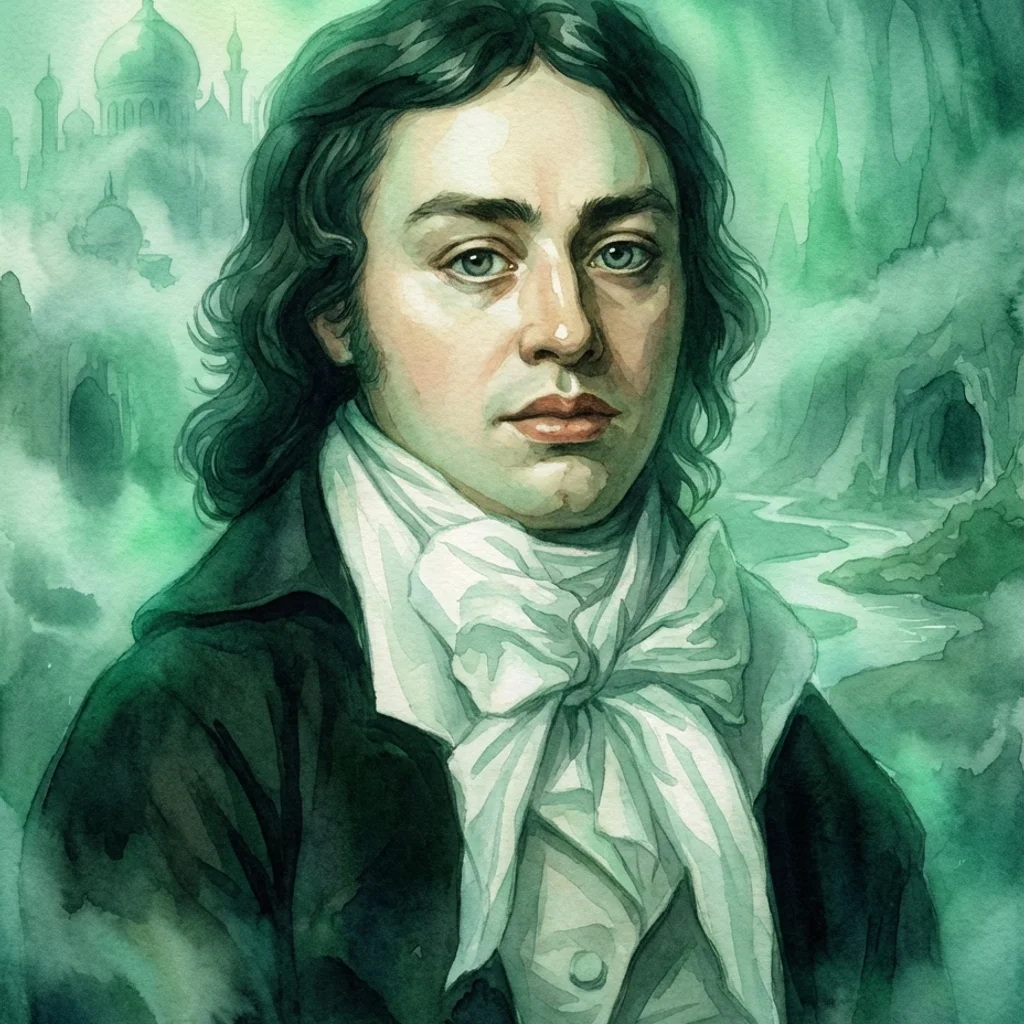
1797