Notable Works
Julia Ward Howe was an American poet, essayist, and reformer best known for writing the lyrics to “Battle Hymn of the Republic.” Born in 1819 to a wealthy New York banking family, she received an unusually rigorous education for a woman of her era, studying languages, philosophy, and music. In 1843 she married Samuel Gridley Howe, a physician and reformer who directed the Perkins School for the Blind, and the couple settled outside Boston, where Julia entered the intellectual circles of New England’s reform movements.
Her literary career began with the anonymous collection Passion-Flowers (1854), followed by Words for the Hour (1857) and several plays. The “Battle Hymn” itself was written in November 1861 after she visited a Union Army camp near Washington, D.C. and heard soldiers singing the marching tune of “John Brown’s Body.” Setting new lyrics to the same melody on the night of the camp visit, she sold the poem to The Atlantic Monthly, which published it on the magazine’s front page in February 1862. Within months it had become the unofficial anthem of the Union cause and one of the most enduring songs in the American canon.
In the decades after the Civil War, Howe became a leading voice for women’s rights. She co-founded the New England Woman Suffrage Association in 1868 and served as president of the American Woman Suffrage Association. Her 1870 “Mother’s Day Proclamation” — written in response to the Franco-Prussian War — called on mothers across nations to organize against war, and is one of the earliest public proposals for what would become Mother’s Day. She edited The Woman’s Journal alongside Lucy Stone, lectured widely on women’s education and pacifism, and continued publishing essays and poems into her eighties. In 1908, two years before her death in Newport, Rhode Island, she became the first woman elected to the American Academy of Arts and Letters.
Poems by Julia Ward Howe (1)
Browse with filters →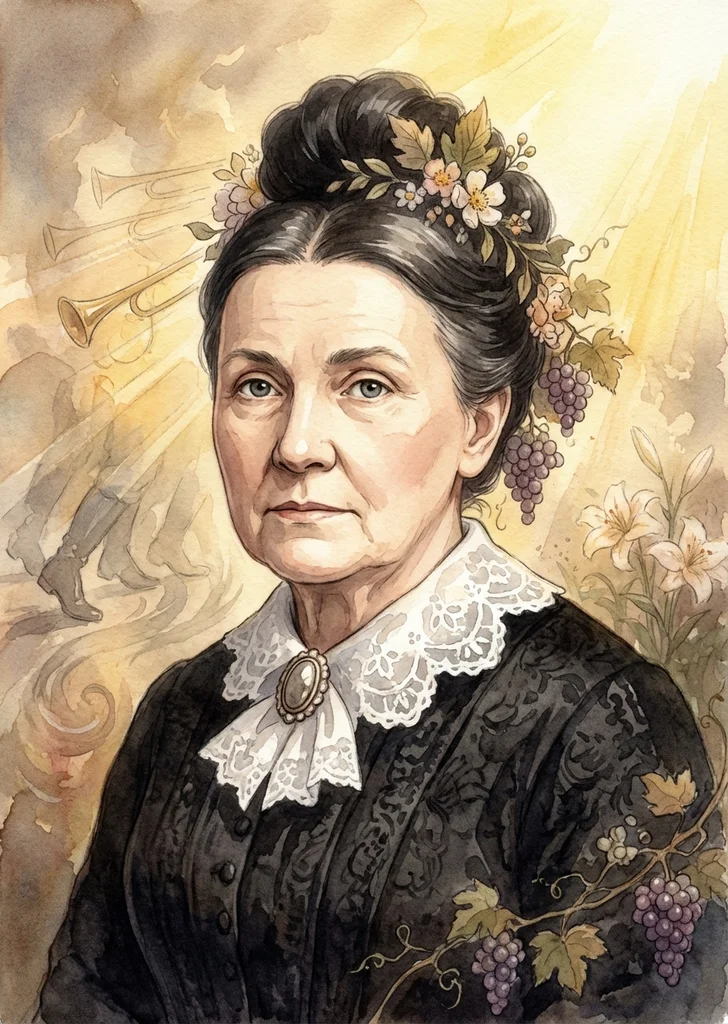
1861